Basics of Poster Design: Grid, Composition, Scale, Style
How to build a poster that reads in one glance.
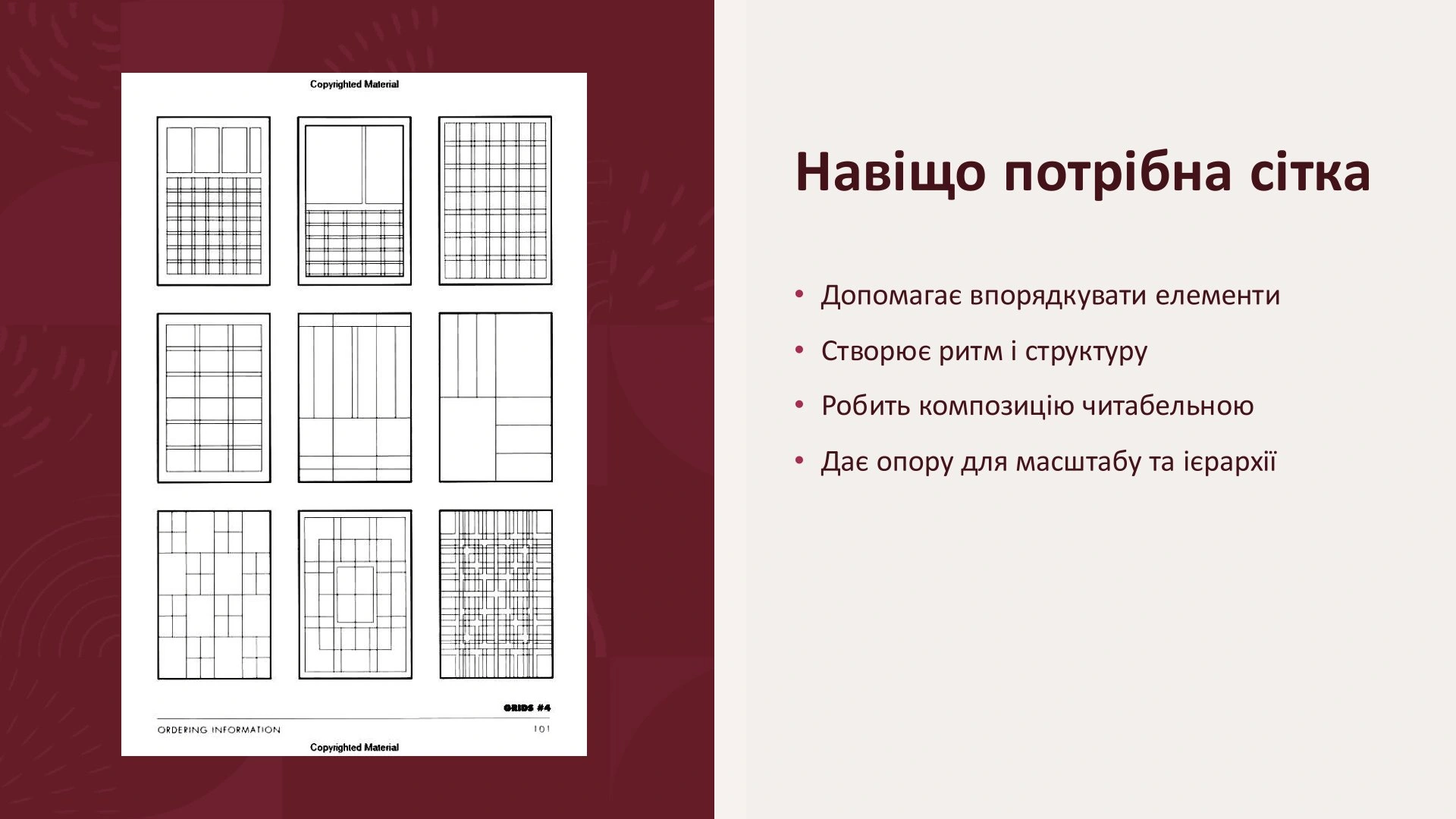
Why a poster needs a grid
A poster is judged in a second: either the viewer understands the message or they walk past. The grid helps to control this second. It does not have to be visible, but it holds the composition together.
- organises elements on the page;
- creates rhythm and a clear structure;
- makes text and images readable at a glance;
- gives a base for scale and visual hierarchy.
Types of grids
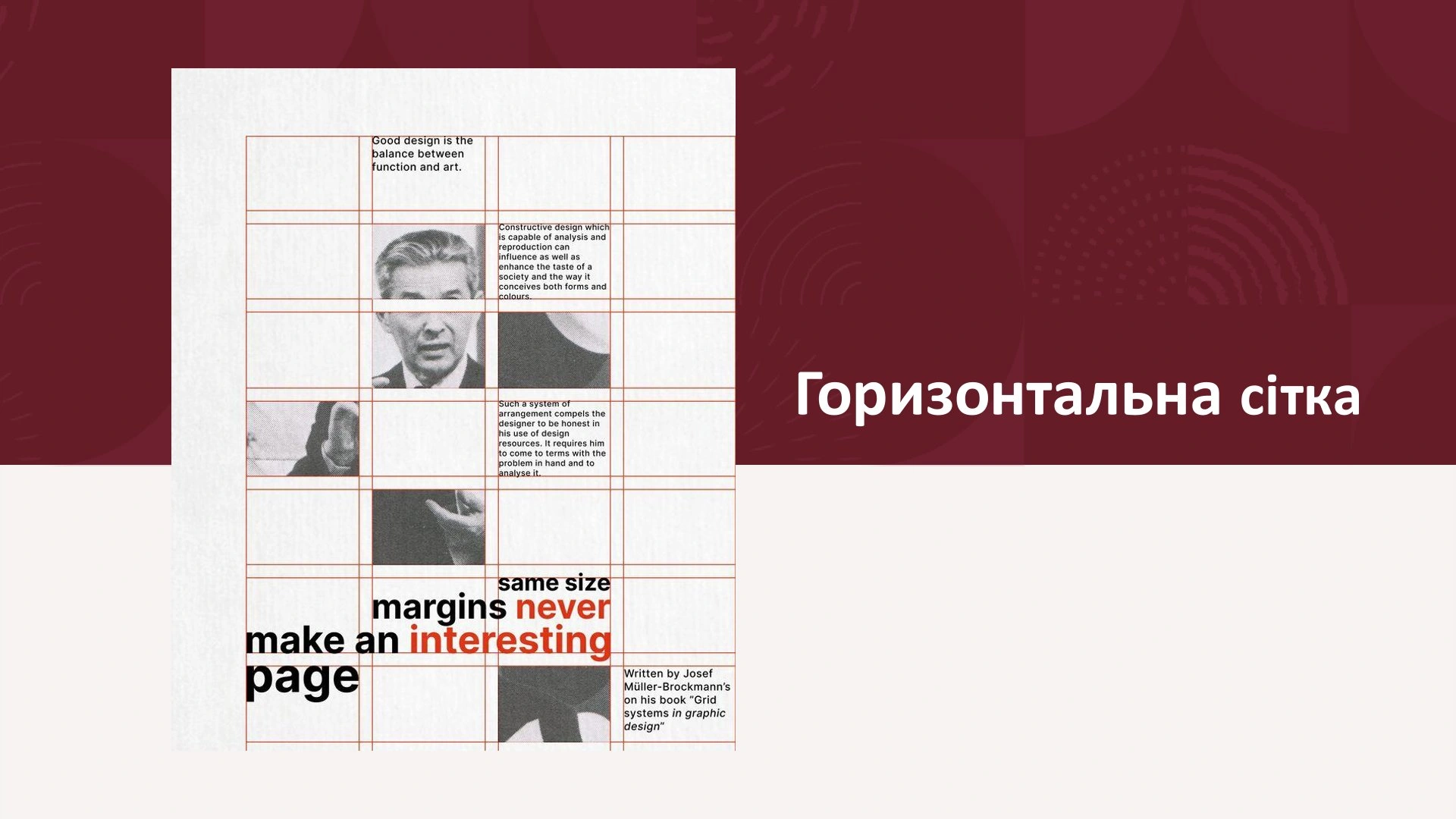
Horizontal grid
- built from rows that slice the poster horizontally;
- works well with headlines and larger text blocks;
- useful for educational, cultural or informational posters.
Vertical grid
- classical column structure;
- most common grid in posters and editorial design;
- keeps title, copy, logos, date and place aligned.
Diagonal grid
- creates movement and direction;
- fits music, sport and experimental events;
- adds energy even with very simple graphics.
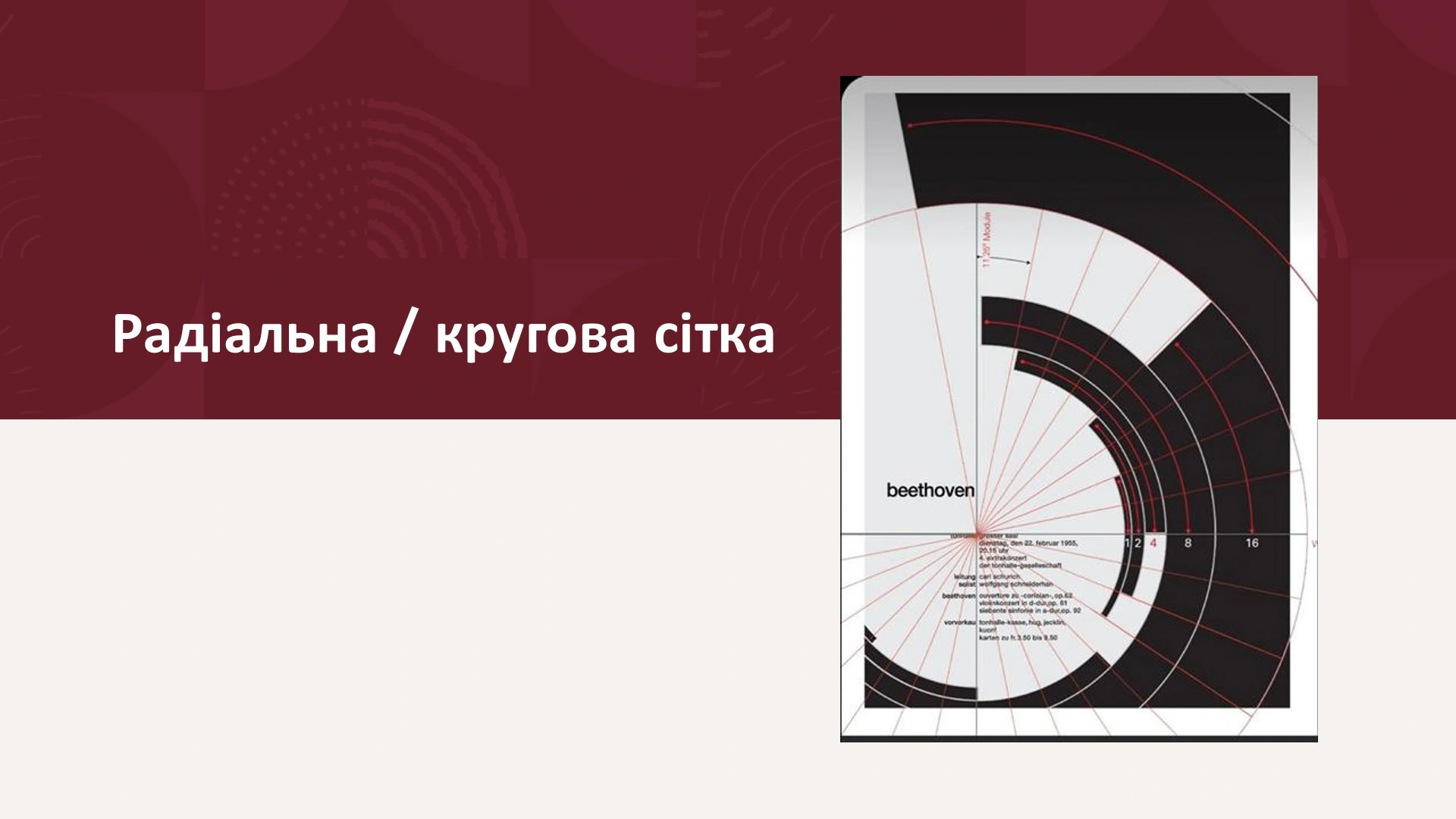
Radial / circular grid
- focuses everything towards the centre;
- works for festivals, big events and abstract themes;
- naturally pulls the eye to one key element.
Scale and composition
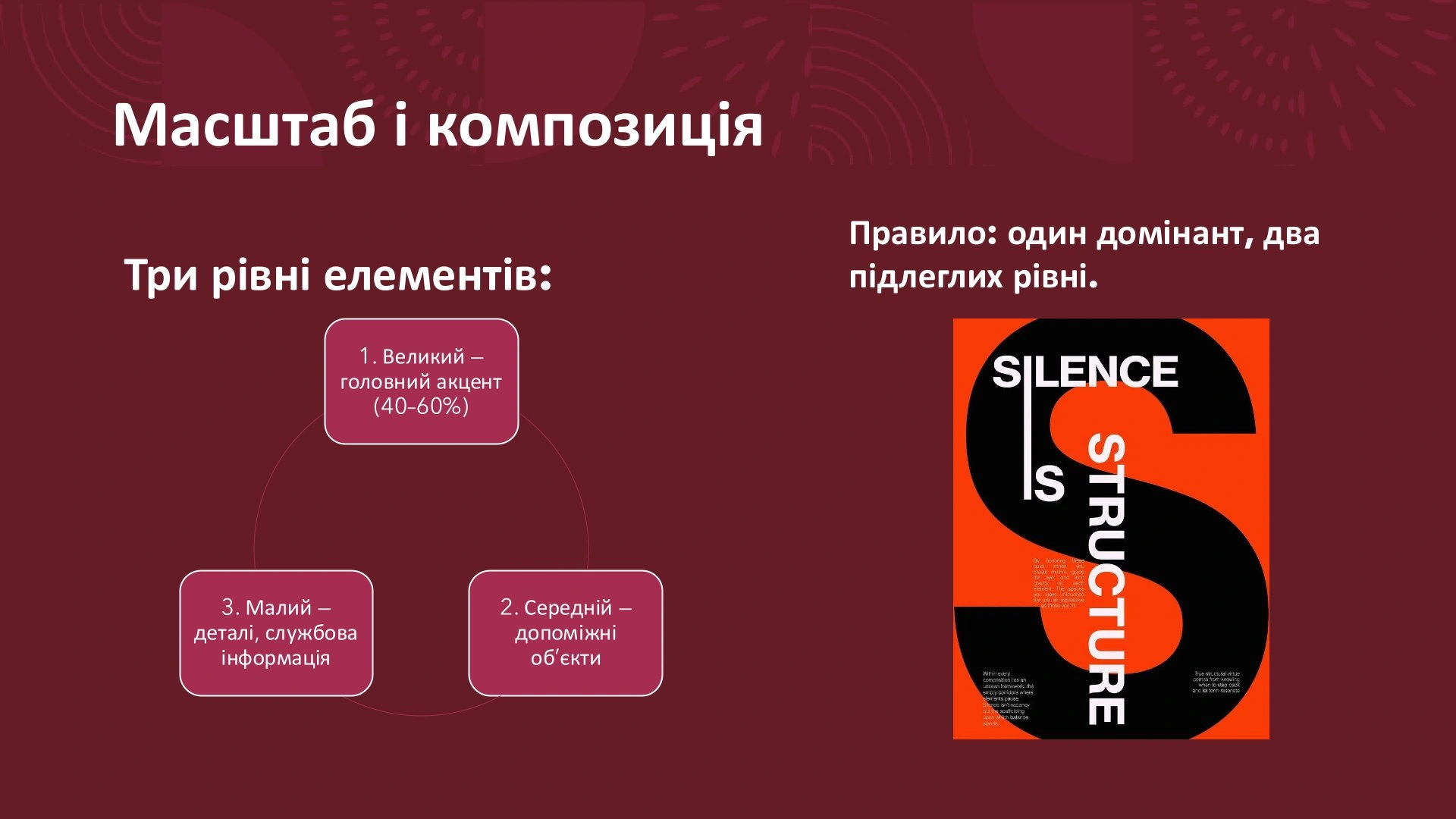
To make a poster work, elements need different visual weight. It is helpful to think in three levels.
- Dominant – the main element (word, number, image) that is visible from far away.
- Second level – adds context: subheading, short explanation, slogan.
- Third level – service information: date, place, contacts, partner logos.
The basic rule: one clear dominant and two supporting levels. If there are several dominants, the viewer loses focus.
Colour in poster design
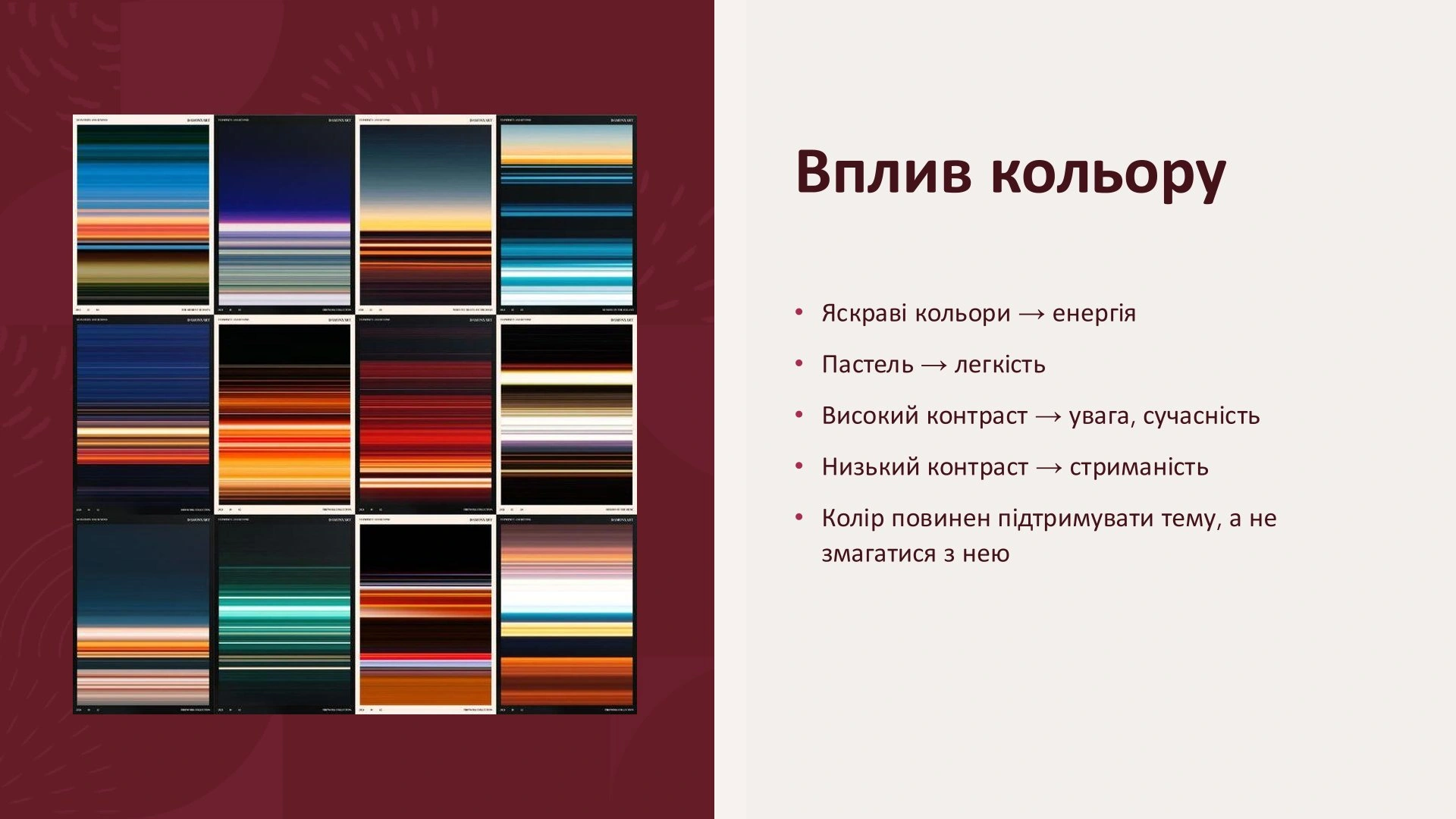
Colour shapes both mood and structure. It should support the message instead of fighting it.
- bright colours – energy, noise, strong accent;
- pastels – lightness, calm, distance;
- high contrast – attention, a sharp, contemporary feeling;
- low contrast – restraint, softness;
- combining colour contrast with scale contrast gives maximum impact.
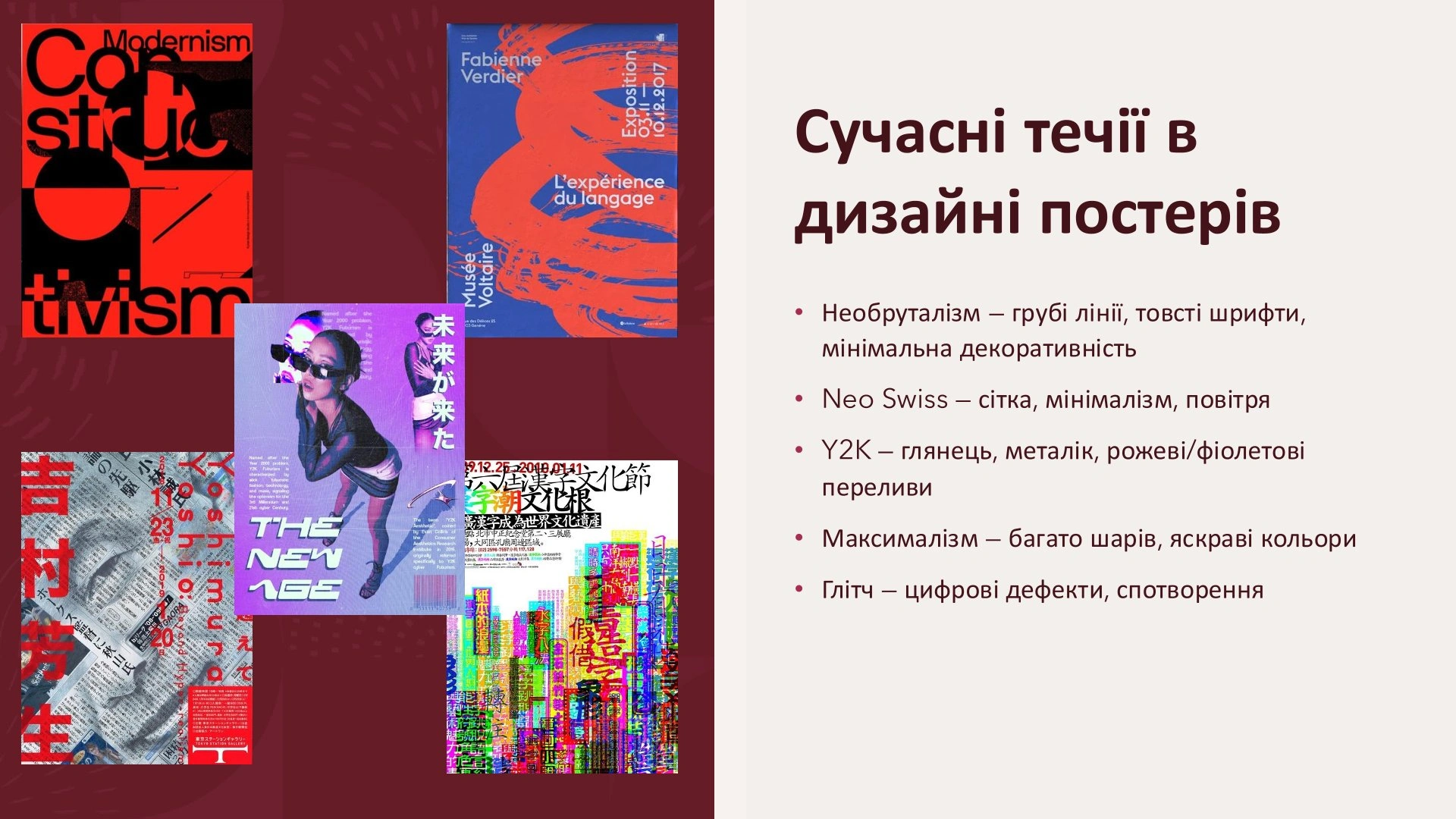
Contemporary poster styles
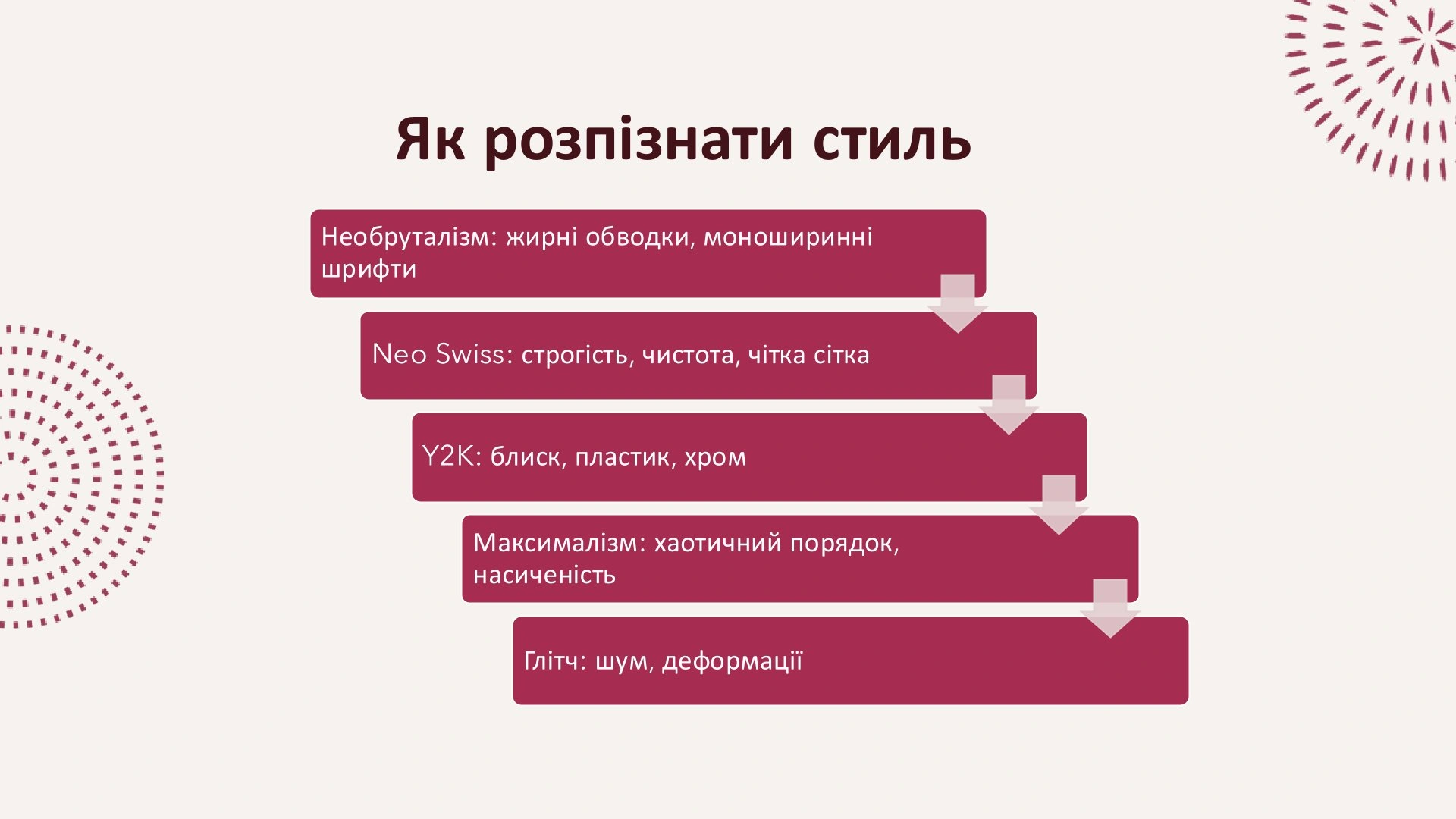
- Neobrutalism – rough lines, heavy type, little decoration, raw shapes.
- Neo Swiss – strict grid, minimalism, lots of white space, typography in focus.
- Y2K – gloss, metallic surfaces, gradients, pink–violet highlights and 2000s nostalgia.
- Maximalism – many layers, textures and loud colours, controlled visual “noise”.
- Glitch – digital artefacts, distortions, offsets, a sense of broken signal.
Recognising and using style
Instead of copying trends blindly, it helps to ask a few questions:
- what role does the grid play here – subtle support or visible structure?
- what is the dominant: word, shape or image?
- how does colour interact with the message – does it help or distract?
- which of the current styles does this poster lean towards – and why?
Once you understand how grid, hierarchy, scale, colour and style work together, you can bend or break the rules on purpose. That is where poster design becomes truly playful and personal.
Tip: Use ← → to navigate, Space to play/pause. On mobile – just swipe. The presentation slides are in Ukrainian.